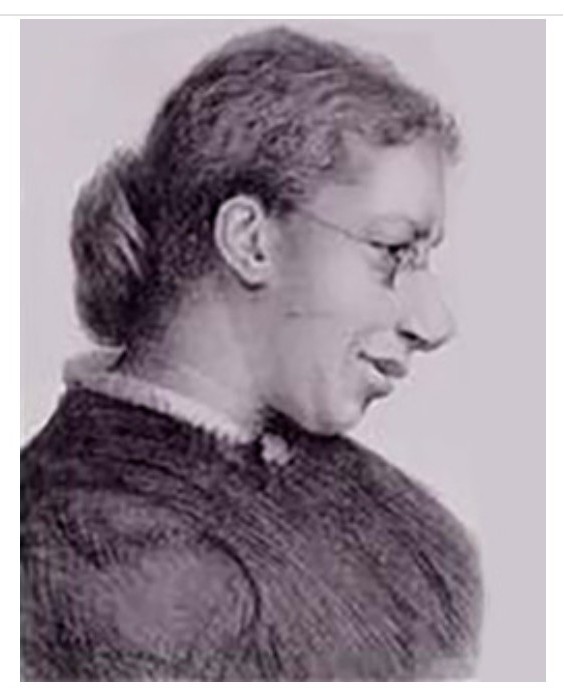
 Helen Blackburn (May 25, 1842 - January 11, 1903) was a prominent feminist, writer, and campaigner for women’s rights.
Queer Places:
Brompton Cemetery, 310 A304, Kensington, Greater London SW3 6HP
Helen Blackburn (May 25, 1842 - January 11, 1903) was a prominent feminist, writer, and campaigner for women’s rights.
Born in County Kerry, Ireland, she moved to London in 1859. She is best remembered for her significant contributions to the women's suffrage movement in Britain, particularly as a dedicated chronicler and secretary to suffrage organizations.
Blackburn joined the Central Committee of the National Society for Women’s Suffrage in 1874 and served as secretary until 1895. She also acted as secretary for the Bristol and West of England Suffrage Society.
She served as the sole editor of The Englishwoman’s Review from 1881 to 1890. Her book, Women's suffrage: a record of the movement in the British Isles (1902), is considered an essential historical record of the movement's early years.
Blackburn was a staunch opponent of legislative restrictions on women’s employment. She co-founded the Freedom of Labour Defence League in 1889 to advocate for women's right to work without factory-based restrictions.
She was known as a modest, self-effacing figure who preferred to work in the background. Upon her death in 1903, she bequeathed her extensive collection of suffrage materials to Girton College, Cambridge.
Helen Blackburn is one of the 59 women and men featured on the plinth of the Millicent Fawcett statue in Parliament Square, London, which was unveiled in 2018. The installation commemorates individuals who contributed to the fight for women’s suffrage.
Descriptions of Blackburn’s personal life emphasize her devotion to her suffrage work, her role as a caregiver for her father, and her close professional friendships with other movement leaders, such as Lydia Becker and Caroline Ashurst Biggs.
Helen Blackburn’s relationships with Lydia Becker and Caroline Ashurst Biggs were rooted in their shared commitment to the women’s suffrage movement and feminist journalism. Their connection was defined by deep professional collaboration, mutual respect, and a shared dedication to archiving the history of the movement.
Blackburn’s respect for Becker and Biggs was so profound that she established "The Blackburn Collection" at Girton College, Cambridge, specifically in their memory. This collection—comprising books, pamphlets, and periodicals—was intended to preserve the records of the worldwide position of women during the 19th century.
Caroline Ashurst Biggs served as the editor of The Englishwoman’s Review for nearly twenty years. Following the deaths of her predecessors and associates, Blackburn continued this legacy of feminist journalism, serving as the journal's editor from 1881 to 1890 and as joint editor until 1895.
All three women were key figures in the National Society for Women’s Suffrage. They worked together within the movement’s leadership circles, often collaborating with other prominent figures like Jessie Boucherett and Millicent Garrett Fawcett to organize petitions, manage societies, and influence public policy.
Blackburn acted as a chronicler for her colleagues. Following the death of Caroline Ashurst Biggs in 1889, Blackburn authored her obituary. Similarly, in 1897, Blackburn published Words of a Leader, a collection of extracts from Lydia Becker’s writings, and later included biographical sketches of Becker in her own history of the suffrage movement, Women's suffrage: a record of the women's suffrage movement in the British Isles (1902).
References:
Support this project
This website is a passion project researched, developed, and funded entirely by me. If you find the content valuable and would like to help support the ongoing research and hosting costs, any contribution is deeply appreciated.
Thank you for keeping this independent resource alive!
My books on Amazon: Elisa Rolle's books